


Recommended Products
- Ceramic Fiber Modules
 Temperature Grade: 1100°C(2012°F), 1260°C(2300°F), 1400°C(2552°F), 1430°C(2600°F)
CCEWOOL ceramic fiber modules are made from spun ceramic fiber blankets and processed through precision machining and pre-compression. Each module is custom-manufactured strictly according to the customer's drawings. The modules feature a clean white appearance, uniform dimensions, and straight edges to ensure tight integration with the kiln structure, forming a seamless insulation layer u
- Ceramic fiber square rope
 Ceramic Fiber Rope is a length of fibers, twisted or braided together to improve strength for pulling & connecting and can also be called as fibril or filament. We provide round rope, square rope and twisted rope. Both kind has two type, glass filament reinforced and stainless stainless steel reinforced.
- Bio Soluble Fiber Blanket
 CCEWOOL Bio Soluble (Low Biopersistent) Fiber Blanket is made from alkaline earth silicate and is a calcium-magnesium insulating fiber. It is referred to as a soluble fiber because it has some solubility in bodily fluids. The introduction of MgO and CaO in soluble fibers enhances their flexibility, elasticity, and provides excellent thermal and mechanical performance.
- Ceramic Fiber Tape
 Ceramic Fiber Tapes that are fabricated using high quality ceramic fiber yarn and are reinforced with fiberglass filament & ss wire.
- Ceramic Fiber Cloth
 CCEWOOL Ceramic Fiber Cloth is a woven fabric made from our high quality ceramic fiber yarn. It is strong, lightweight, flexible, and available in a wide variety of thicknesses, widths and densities. Ceramic cloth contain absolute amount of binder material which is normally burned at lower temperature and does not affect the insulation property.
- DJM Insulating brick
 CCEFIRE DJM Series Mullite insulation brick is a new type of refractory material, which can directly contact with fire, characterized with high temperature resistance, lightweight, low thermal conductivity, good energy saving effect, specially suitable for cracking furnace, hot blast furnace, ceramic roller kiln, porcelain kiln extraction, glass crucible and various electric furnaces as lining. It is an ideal product of energy efficiency and longevity.
- Ceramic fiber board for wall-hung boilers and gas boiler
 Temperature Grade: 1260°C(2300°F), 1400°C(2550°F), 1430°C(2600°F)
CCEWOOL Ceramic Fiber Board for wall-hung and gas boilers is distinguished by its lightweight construction and high compressive strength. Manufactured via automated, continuous processes with a small addition of high-purity aluminosilicate fiber binder, it offers precise large dimensions, superior flatness, excellent strength, low weight, outstanding thermal-shock resistance, and anti-spalling properties.
- Ultrathin 6mm Ceramic fibre blanket
 Temperature Grade: 1260°C(2300°F), 1400°C(2552°F), 1430°C(2600°F)
CCEWOOL Untral-thin Ceramic Fibre Blanket is a new type of fire-resistant insulation materials in white and tidy size, with integrated fire resistance, heat separation and thermal insulation functions, containing no any binding agent. All CCEWOOL Ceramic Fibre Ultra-thin Blankets are made though spun fiber production, which is widely used in various sectors of refractory, insulation.
Top articles
- Why are more boilers choosing CCEWOOL? thermal ceramics modules for insulation?
- What is the lifespan of ceramic fiber modules?
- How CCEWOOL Refractory Ceramic Fiber Module Helps Metallurgical Furnaces Cut Energy Use and Maintenance Needs?
- Why More Aluminum Plants Are Choosing CCEWOOL Refractory Fiber Board for Tundish and Electrolytic Cell Insulation?
- Why Choose CCEWOOL Ceramic Insulation Board for Petrochemical Furnace Hot-Face Linings?
- What is Ceramic Fiber Back-lining Board Used For?
- What happens if ceramic fiber board gets wet?
- What is ceramic fire board used for?
- How to use a ceramic fibre blanket?
- What temperature is a ceramic thermal blanket?
Latest articles
- Superwool Blanket - CCEWOOL
- Why are more boilers choosing CCEWOOL? thermal ceramics modules for insulation?
- Ceramic Fiber Blankets - CCEWOOL
- What is the lifespan of ceramic fiber modules?
- Insulation Ceramic Fiber Blanket - CCEWOOL
- High-Density Molding - The Secret Behind CCEWOOL? Refractory Ceramic Fiber Block’s High Rebound
- Ceramic Fiber Board Insulation - CCEWOOL
- How CCEWOOL Refractory Ceramic Fiber Module Helps Metallurgical Furnaces Cut Energy Use and Maintenance Needs?
- Refractory Ceramic Fiber Blanket - CCEWOOL
- Why More Aluminum Plants Are Choosing CCEWOOL Refractory Fiber Board for Tundish and Electrolytic Cell Insulation?
Your browsing history

What is the difference between insulating fire brick and fire brick?
Insulating Fire Brick is a lightweight, porous refractory material designed primarily for insulation and energy-saving. By adding foaming agents or combustible materials during production, small air pockets are formed during firing, significantly reducing the density of the brick.
In contrast, Fire Brick emphasizes high strength and wear resistance. Typically denser and more compact, it is better suited to withstand direct exposure to high-temperature flames and molten materials.
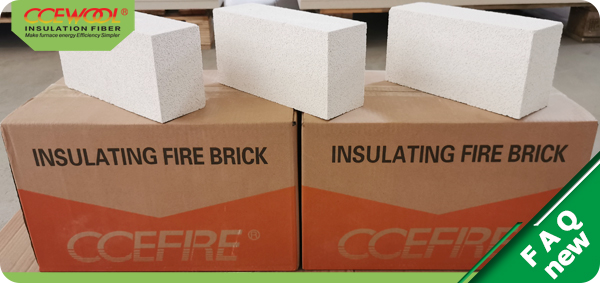
The Advantage of Lightweight Insulation Bricks: Reducing Load and Improving Efficiency
Lightweight is one of the most prominent features of Insulating Fire Brick. With a density typically ranging from 0.6–1.2 g/cm3, it is much lighter than fire brick. This feature brings multiple benefits in furnace lining design:
Reduces Furnace Load: The lighter weight significantly reduces the load on the furnace structure, decreasing the stress on steel structures and enhancing overall equipment safety.
Shortens Heating Time: Lighter materials have lower thermal mass, allowing the furnace to heat up faster during start-up or temperature rise, thus saving energy and improving production efficiency.
Lowers Heat Loss: The air pockets inside the brick create an insulating barrier that significantly reduces heat transfer, helping maintain internal thermal efficiency within the furnace.
These advantages make insulating fire bricks essential for energy-saving and heat-efficient high-temperature industrial furnaces.
The Advantage of Dense Fire Bricks: Strength and Durability
Unlike insulating fire bricks, Dense Fire Bricks have a density typically above 2.0 g/cm3, offering high compressive strength. They can withstand the impact and wear of high-temperature environments. In areas like steel and glass industries’ furnace working faces, dense fire bricks provide reliable protection against flames and molten materials. The drawback is their higher thermal conductivity, which limits insulation performance, so they are typically used in combination with insulating fire bricks.
Complementary Use: Distinguishing Between Back-up and Working Layers
In actual furnace linings, insulating fire bricks and dense fire bricks are often used together. Dense fire bricks serve as the working layer, withstanding high temperatures and chemical corrosion, while insulating fire bricks act as the back-up layer, providing insulation and energy-saving benefits. This combination ensures both the strength of the furnace lining and the thermal efficiency and cost-effectiveness of the system.
The difference between insulating fire bricks and fire bricks lies in their positioning and functionality. CCEFIRE insulating fire bricks excel in lightweight and low thermal conductivity, helping reduce energy consumption, alleviate structural load, and improve thermal efficiency. Dense fire bricks, on the other hand, emphasize strength and durability, ensuring the furnace lining remains stable in harsh high-temperature environments. The combination of both materials is essential for creating an efficient, durable, and energy-saving furnace lining system.
leave message to apply
- Your Name :*
- Company Name:*
- Your E-mail:*
- Remarks:*


